
Electrical capacity
Breaker size, wiring, disconnects, and panel capacity must match the equipment. Electric tankless units can require substantial service capacity.
Standard tank and electric alternatives
Diagnose or replace an electric water heater by checking elements, thermostats, controls, electrical capacity, recovery, tank condition, and the building's hot-water pattern.
Watch for these signs
Our services
Your options
We look at the cause, the condition of the existing system, and what will work best for your property.
Breaker size, wiring, disconnects, and panel capacity must match the equipment. Electric tankless units can require substantial service capacity.
Standard electric tanks may recover differently than gas units. Peak usage and first-hour rating matter when several people need hot water close together.
A heat-pump water heater can reduce water-heating energy use in a suitable location, but space, air, condensate, and noise must be considered.
Around the Valley
A heat-pump model may benefit from warm ambient air, but every installation still needs adequate air volume, drainage, clearances, and protection of the surrounding space.
Planning the work
Most residential electric tank heaters have an upper and a lower heating element, a thermostat for each, and a high-limit switch that cuts power if the water overheats. Some small and point-of-use tanks have a single element. Which part failed shows up in the pattern of the problem.
Element and thermostat tests involve live wiring, usually 240 volts, inside the heater's access panels, so leave them to a qualified technician.
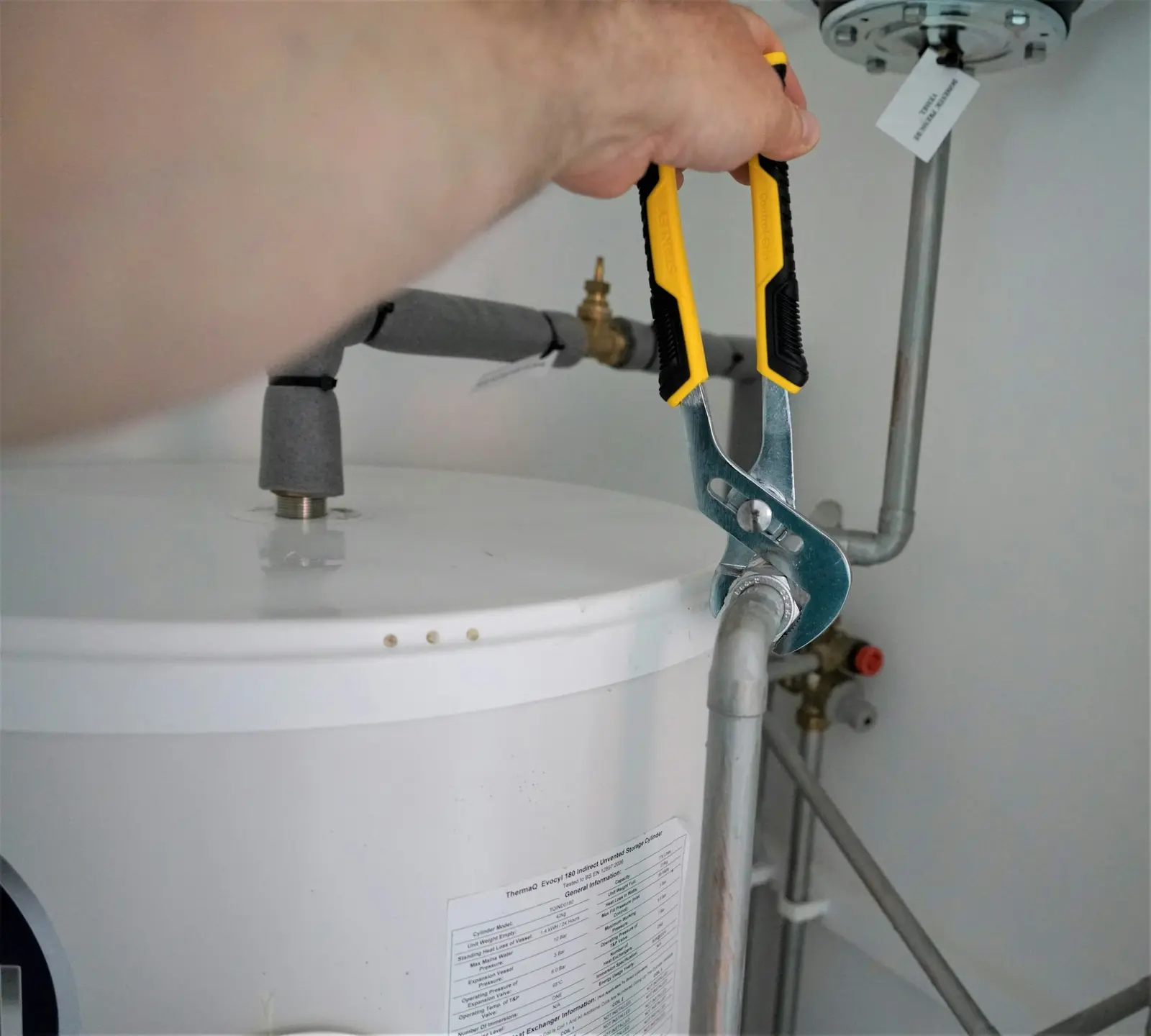
Two checks are safe for anyone and can save a visit. Everything behind the heater's access panels is live electrical work, so stop there.
What happens next
We confirm the symptoms, power supply, age, and demand.
Elements, thermostats, controls, tank, and installation conditions are tested.
Repair and replacement options are compared.
Approved work is completed and temperature and operation are verified.
Common questions
Often, yes. The parts that usually fail are the heating elements and their thermostats, then the high-limit switch and loose or burned wiring connections, and each one can be replaced on its own. Testing shows which part failed, so nothing is swapped on a guess. A leaking tank body generally requires a new heater.
A failed element, thermostat problem, sediment, increased demand, an undersized unit, or a piping issue can reduce usable hot water. Testing separates equipment failure from sizing.
Yes. Any leak from the heater goes to our emergency line, and water reaching the wiring or electrical panel is the most urgent case. Close the cold-water valve, switch off the heater's breaker if you can do it without standing in water, and call. The emergency line answers 24/7, nights, weekends and holidays included.
Usually not. Whole-home electric tankless equipment can require significant electrical capacity and multiple large circuits, so the panel and service should be reviewed first.
Helpful guides
Related services
Get help
Tell us what is happening and our team will be in touch.
5-star feedback for One Call Plumbing Services, the local team behind Water Heater Warehouse AZ: 4.8 out of 5 from 78 Google reviews (October 2026).
“Kyle from One Call Services assisted us with the annual maintenance service on our tankless water heater. … Kyle was knowledgeable, professional, and very timely in his work.”
Barbara B.Posted on Google, May 2023
View on Google (opens in a new tab)“Quick to respond, fair on the cost and offered a lot of solutions to avoid ongoing issues.”
DavePosted on Google, Jan 2026
View on Google (opens in a new tab)